Reversing Early Recurrence
Accelerating Cancer Drug Development
Action
We are creating a Standing Cancer Clinical Trials platform – available to the entire biopharma industry – that will monitor for ctDNA and quickly enroll eligible patients to open trials, thus bypassing the slow and costly process of ramping up and down screening infrastructure for individual trials, and creating an opportunity to rapidly reverse recurrence in cancer patients (Figure 1).
For a period of 3-5 years after curative-intent treatment, patients will receive frequent ctDNA testing (every 1-3 months) via convenient blood collection (e.g., outside of hospital or in the course of routine care), in order to identify MED as soon as possible.
The Standing Platform will work with a consortium of biopharma companies and provide an efficient mechanism through which companies could reach patients with newly identified MED, to conduct smaller, shorter signal-finding trials, which would otherwise be infeasible. We envision biopharma companies may want to test many treatments, from small exploratory studies of new drugs to larger pivotal trials.
To make the system run smoothly, this central entity will act as (i) an information hub, rapidly matching patients with newly detected MED and their care providers with appropriate clinical trials sponsored by the consortium of biopharma companies and (ii) a data repository that would propel knowledge about the natural history of ctDNA.
The team published a manuscript which lays out the evidence to support such a Platform and a proposed roadmap to get there, and has received productive feedback from a small group of oncologists, researchers, and industry experts.
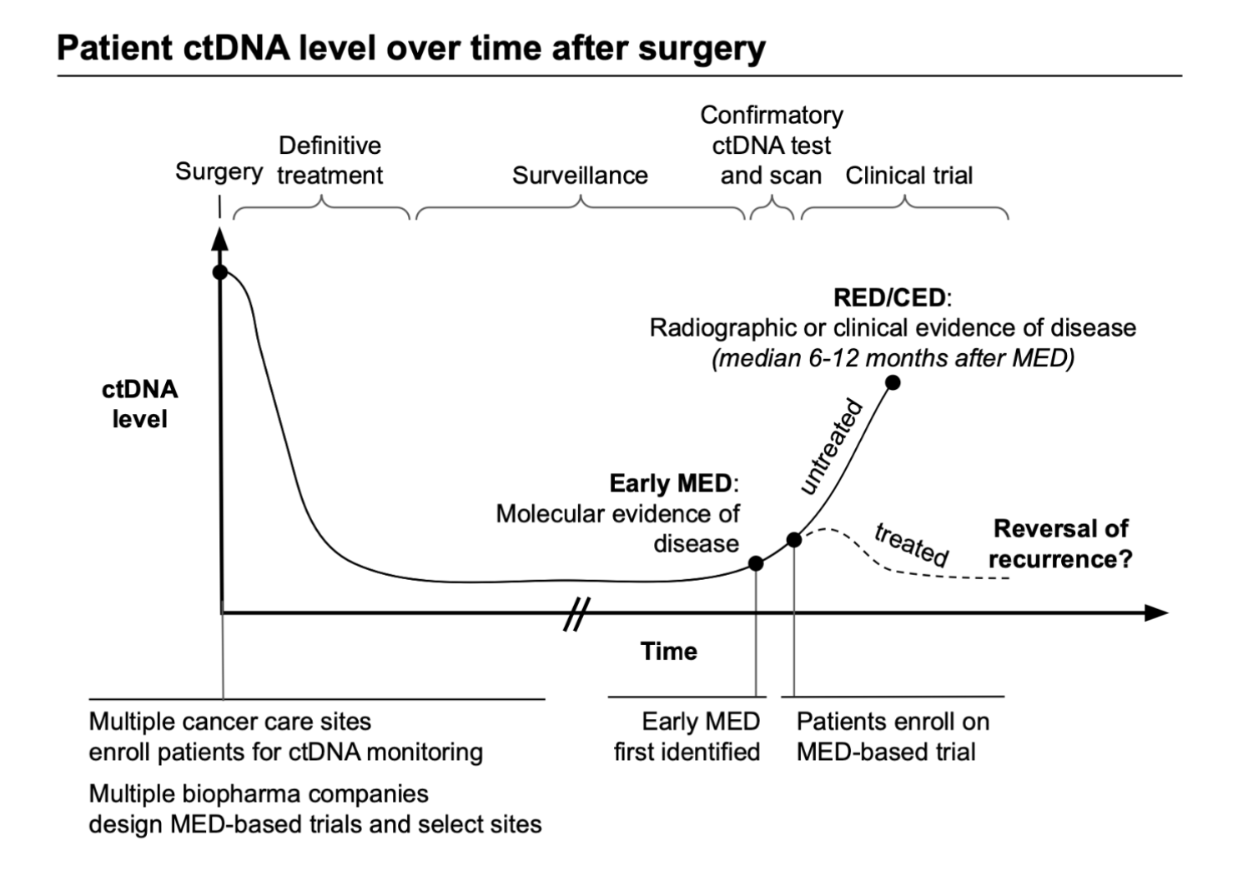
Fig 1: Illustration of testing a drug, in the setting of early MED, for its ability to change ctDNA levels and/or reverse recurrence.
Our Team